
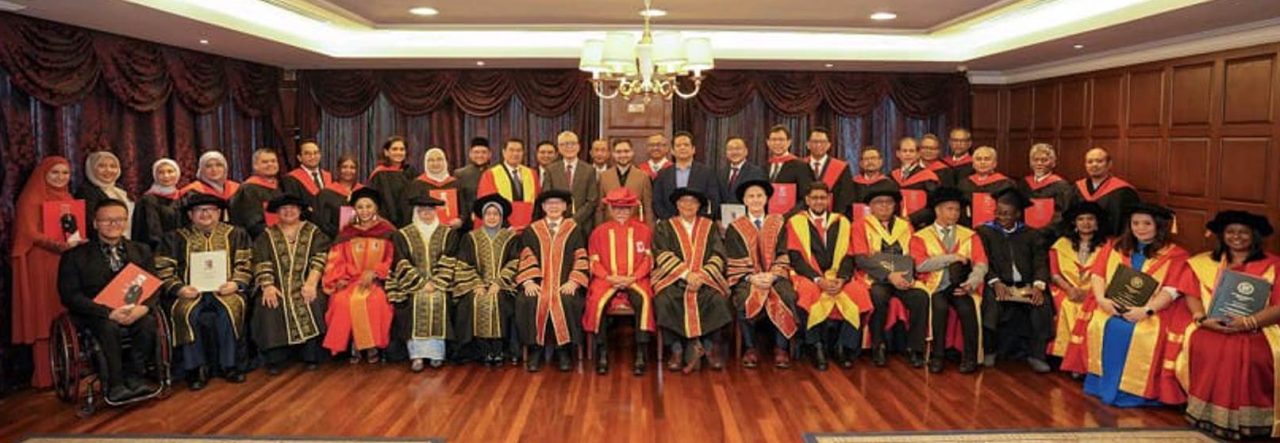
In recognition of the evolving landscape of music creation, European-American University provides alternative pathways for composers working in contemporary, jazz, and popular idioms within its existing Master of Music and Doctor of Music in Composition programmes. The following provisions outline how candidates may fulfill the requirements of the M.Mus. and D.Mus. (Composition) with works that fall outside the traditional classical paradigm, while maintaining equivalent rigor and standards.
Master of Music (M.Mus.) in Composition – Contemporary Track Option
The regulations for the M.Mus. in Composition (secular or sacred) normally require candidates to submit two large-scale Exercises: Part 1 being an orchestral composition with elements of sonata form, canon, and fugue, and Part 2 being a chamber or piano composition on a set subject. Candidates whose expertise and creative practice lie in contemporary genres – for example, jazz composition, commercial music, film scoring, electronic music, or other non-classical forms – may, with approval of the University, pursue a Contemporary Track that adapts these requirements as follows:
• Part 1 (Alternate Exercise):
Instead of an original composition for full classical orchestra, the candidate may submit a comparably substantial composition scored for a large ensemble appropriate to contemporary music. For instance, a jazz big band piece or a work for jazz orchestra with strings, a wind ensemble with rhythm section, or a large electro-acoustic ensemble could be acceptable substitutes. The composition should have a performance duration of not less than twenty minutes and not more than thirty minutes (similar to the orchestral requirement). It must demonstrate an assured command of form, harmony, and texture in the context of the chosen style. The stipulation that the work include “some portion of sonata form” and “specimens of canon and fugue” will be interpreted with flexibility for the contemporary track: the intent is that the piece show sophisticated structural development and contrapuntal skill. In practice, this means the candidate should incorporate analogous complex structures or developmental techniques suited to their genre. For example, a big band composition might include a through-composed development section or an elaborate soli passage that exhibits contrapuntal writing (even if not a strict classical fugue). The candidate should be prepared to highlight where in the score they have addressed structure and counterpoint. The instrumentation for this Part 1 exercise should be “large-scale” in a contemporary sense – a jazz big band typically consists of about 17 pieces (5 saxes, 4 trumpets, 4 trombones, rhythm section) which is considered roughly equivalent in weight to a small orchestra; additional instruments or vocals can be used as desired. Alternatively, a candidate might compose a 20-minute suite for a combination of electronic instruments and live players, or a musical theatre scene with ensemble, etc., if that aligns with their field – the key is that the scope and complexity are commensurate with an orchestral work. Prior to embarking on the composition, the candidate should propose the ensemble and concept to the University Mentor for approval, to ensure it meets the level expected.
• Part 2 (Alternate Exercise):
The second exercise for the contemporary track can likewise be adapted. Instead of a piece for solo piano or classical chamber ensemble on the year’s set subject, the candidate may compose a piece for a smaller contemporary ensemble or solo instrument(s) of their choosing, reflecting the spirit of the set subject (or another approved subject relevant to contemporary music if one is provided by examiners). For example, if the set subject given in a particular year is “What Nature told me”, a contemporary track composer might write a 25-minute suite for a jazz quartet or an electroacoustic soundscape or a song cycle on that theme. The work should be 20–30 minutes in length, as per the standard requirement. The expectation of this exercise is to demonstrate the candidate’s versatility and depth on a more intimate scale than Part 1. In a jazz context, this could be a trio or quartet piece that perhaps explores thematic transformation or programmatic elements tied to the subject. In a media music context, it could be a soundtrack-style composition for a small ensemble with digital audio. The composition should clearly engage with the given subject matter (if one is officially set) or with a subject agreed upon with the Mentor if the provided theme is not suitable. The candidate should ensure that this piece contrasts with the Part 1 work in scoring and approach, to display a range of compositional technique.
• Technical and Presentation Requirements:
The candidate must submit full scores for both Part 1 and Part 2 compositions. For contemporary works, standard notation is expected where applicable (for big band and most ensemble pieces, fully notated scores are required). If the composition incorporates non-traditional notation or improvisational sections, the score should contain sufficient instructions and cues to indicate structure and intent. Annotations may be added to explain how certain passages fulfill the craft requirements (e.g., pointing out a canon between two instruments in a jazz arrangement). Additionally, the candidate is required to submit recordings of the compositions, as with the standard track: since live performances of new works can be challenging to obtain, a high-quality MIDI/mockup or sequenced realization is acceptable, though a live recording is preferable if available. The recording helps examiners gauge the sonic result, especially when unfamiliar instrumentations or electronic elements are used.
• Standards of Evaluation:
The contemporary compositions will be evaluated by the Examining Board with the same rigor as classical works. The examiners will look for evidence of advanced compositional technique: effective development of musical ideas, complexity appropriate to master’s level (e.g. extended harmonies, innovative textures, formal coherence), and mastery of the ensemble’s idiom (for instance, idiomatic writing for jazz instruments, or effective use of studio production in an electronic piece). While the idiom may differ, the level of difficulty and achievement should be equivalent. A straightforward popular song with three chords, for example, would not satisfy the requirement, but a through-composed jazz suite with rich voicings and modulations likely would. If there are doubts about whether a particular approach meets the standard, the candidate’s Mentor will advise adjustments. All other regulations for the Master of Music in Composition apply equally to the contemporary track. This includes originality (the works must be the candidate’s own and new for the degree), the prohibition on submitting previously conferred work, supervision availability, and the procedures for examining, re-submission, and awarding of the degree. Candidates on the contemporary track will be examined via the submitted scores, recordings, and potentially an oral defense (viva voce) if the examiners require clarification, just as candidates on the traditional track might be. In an oral exam, a contemporary track composer might be asked to explain how they employed advanced techniques in a certain passage or to detail their approach to structure in absence of classical forms, etc. Upon successful completion, the degree awarded is still Master of Music in Composition (with no formal distinction on the diploma between classical or contemporary track – the focus simply reflects in the candidate’s portfolio). However, internal records can note the specialization, and recommendation letters or transcripts can mention that the exercises were in a contemporary composition idiom.
Doctor of Music (D.Mus.) in Composition – Contemporary Track Option
For the Doctor of Music in Composition, the standard regulations call for the candidate to submit a portfolio of up to three substantial works, including at least one large-scale composition such as an oratorio, Mass, extended chamber work, opera, or symphonic work. The University recognizes that composers in jazz, electronic, film, or other contemporary realms also produce works of equal substance and merit, though they may not fit those traditional descriptions. Therefore, a D.Mus. (Composition) candidate may, with the approval of the examining authorities, present a portfolio of equivalent contemporary compositions as follows:
• The portfolio should contain no more than three major works of the candidate’s own composition, parallel to the classical route. These works should be substantial in scope and content. Examples of what could constitute a “substantial work” in a contemporary context include:
– An extended Jazz Suite or Jazz Orchestra work – for instance, a multimovement suite for big band or large jazz ensemble, perhaps 30–40 minutes in total length, with cohesive thematic development across movements.
– A Concept Album or Set of Pieces – for composers working in popular or electronic genres, a collection of pieces (e.g., 8 to 10 tracks, 45+ minutes of music) that together form an artistic whole could be considered analogous to a symphonic cycle. The candidate must be the composer (and preferably arranger/producer) of all music in the collection. It should exhibit a unifying concept or story (explicit or implicit) to qualify as a single “work”.
– A Film Score or Video Game Score – an original soundtrack of substantial duration (e.g., at least 30–60 minutes of music) for a feature-length film or a complex game, presented in score form (or detailed cue sheets) and synchronized to visuals if possible. The candidate must have composed the music; if it’s already published, only the candidate’s own work should be considered. This kind of submission should highlight recurring themes, motifs, and sophisticated underscore techniques analogous to an opera or symphonic poem.
– An Electroacoustic or Multimedia Work – a large-scale composition primarily realized in the studio or computer, perhaps with live elements, of significant length and ambition. For example, a 40-minute immersive soundscape in surround sound exploring many textures and transformations, or a multimedia installation’s score.
– A Large-Scale Vocal or Stage Work in Contemporary Style – e.g., a modern musical theatre piece, extended mass in gospel/jazz style, or oratorio-like work using contemporary idioms. If the candidate, say, writes a 90-minute rock opera or a set of three 20-minute choral pieces with jazz ensemble on sacred texts, those could stand in place of the traditional oratorio/Mass requirement. At least one of the submitted works should be analogous to the “major form” expectation of the classical regulations (oratorio, symphony, etc.) in terms of scale and complexity. For example, if the candidate submits a jazz suite (30 min), an album (45 min), and a short chamber piece (15 min), the jazz suite and album would likely be considered the two main works fulfilling the requirement of extended compositions, whereas the shorter chamber piece complements them.
• Instrumentation and Forces:
The candidate has freedom to choose instrumentation according to their artistic vision, but should demonstrate mastery of writing for those forces. If one of the works is for a large ensemble (big band, orchestra with electronics, etc.), that will satisfy the requirement of writing for a substantial ensemble. It is encouraged (though not strictly required) that the portfolio show diversity – for instance, not three big band charts all in the same style, but perhaps one big band, one small group piece, and one cross-genre experiment. However, if the candidate’s output is focused (e.g., they are primarily a film composer), it is acceptable that all works fall in that category as long as each is distinct (say, one dramatic score, one documentary score, one experimental score to showcase range).
• Counterpoint and Structure:
While the classical guidelines explicitly mention counterpoint (canon, fugue) and sonata form, the contemporary track expects analogous rigour. The doctoral portfolio pieces should collectively reflect the candidate’s command of advanced compositional techniques. This might mean: evidence of contrapuntal writing (perhaps a fugue for big band sax section, or a complex round in an electronic piece, etc.), sophisticated harmonic language (extended jazz harmony, novel sound synthesis techniques, etc.), and formal innovation (multi-movement structures, thematic transformation across a work). The candidate should be prepared in their written commentary (see below) or in an oral exam to point out how their works meet the high bar of complexity and artistry. The examiners will be looking, for example, for rich development of material (not just repetitive loops unless the repetition is purposeful minimalism taken to an extreme art, etc.), for creative orchestration or sound design, and for originality of musical ideas. • Scores and Recordings: The candidate must submit full scores for all works where notation is applicable (e.g., big band, vocal, chamber works). For works that are studio-produced (like electronic music or film scores), a detailed score or transcription of key sections is expected, along with comprehensive descriptions and any alternate forms of “score” (such as digital audio workstation project files or screenshots of sequences, if that helps illustrate the composition’s structure). In fields where traditional notation isn’t the norm, the candidate should provide as much notated or visual representation as possible to allow examiners to assess the work on paper. Additionally, recordings of all works are required. For large-scale works that have not been performed live, high-quality MIDI realizations or studio renderings are acceptable, but the candidate should strive for as realistic a representation as possible. If an album is submitted, the mastered album tracks suffice as recording (with lyrics and any other pertinent info provided in text). If a film score is submitted, ideally it should be synced with the picture; if rights issues prevent sending the video, then audio cues with timecode and a descriptive cue list would be needed. The recordings will greatly assist examiners, as contemporary idioms sometimes don’t fully communicate on paper, especially with electronic timbres or groove-based nuances.
• Commentary and Documentation:
As with the classical D.Mus., the candidate should submit a contextual commentary or analytical essay discussing the portfolio (see the standard regulations 7 and 8 for expected standard and presentation). For the contemporary track, this document is the place to articulate how the portfolio pieces are of doctoral caliber. The candidate can discuss influences (e.g., “Inspired by the large-scale suites of Duke Ellington, my Jazz Suite expands on motivic interplay…” or “In my electroacoustic work, I employed serial techniques to control parameters of sound, analogous to methodical processes in contemporary classical composition”). They should highlight use of structure (“Piece A is in five movements, each developing a core theme in different tempi and styles”) and any counterpoint or formal complexity (“Piece B features a double canon in the horns at its climax, which is a nod to Baroque techniques within a funk context”). Essentially, the commentary should assure examiners that the candidate has knowingly applied advanced compositional craft, even if the idiom is unconventional. It should also contextualize the works within contemporary music: for instance, noting if one piece is cutting-edge in blending genres, or how it contributes to jazz literature, etc. If the works have been performed or recorded, mention of their reception or performers’ feedback can be included.
• Examination:
The exam process for the D.Mus. portfolio (contemporary track) will parallel the usual process. Examiners (including likely an external examiner knowledgeable in contemporary composition or the specific genres involved) will study the scores, listen to the recordings, and read the commentary. In an oral defense, candidates should be ready to discuss technical details (e.g., “Explain the tuning system you used in your electronic piece” or “How did you approach writing for the rhythm section versus the horns in your big band piece?”) and aesthetic choices (“What are the innovative aspects of your work compared to existing jazz orchestral literature?”). The outcome recommendations (accept for D.Mus., accept for M.Mus., refer for revisions, or reject) apply equally. A candidate on this track could conceivably be awarded an M.Mus. instead if the work, while good, doesn’t reach the doctoral threshold – for example, if it’s determined that the pieces are excellent but perhaps not significantly beyond master’s level in innovation or complexity. In summary, the Contemporary Composition Track is designed to maintain the high expectations of the EAU composition degrees while accommodating non-traditional forms. Composers working in jazz, popular, experimental, and cross-over genres are encouraged to take this route, ensuring their work is judged on equivalent criteria of complexity, originality, and artistry. The University will ensure that at least one examiner with appropriate stylistic expertise is involved in assessing such portfolios, so that the nuances of the genre are properly understood. All awarded degrees will remain simply Master of Music or Doctor of Music in Composition, but the student’s transcript and record can reflect the nature of their submissions for future reference. This initiative allows modern composers to achieve these prestigious qualifications without forcing their creative output into a strictly classical mold, and it underscores the University’s commitment to inclusivity of diverse musical languages within its academic framework.