
Professor Ahmed Mohammed Sanusi, who is Professor of Criminal Justice at European-American University was recently promoted to the post of Commissioner of Police(CP) in the Nigeria Police Force.
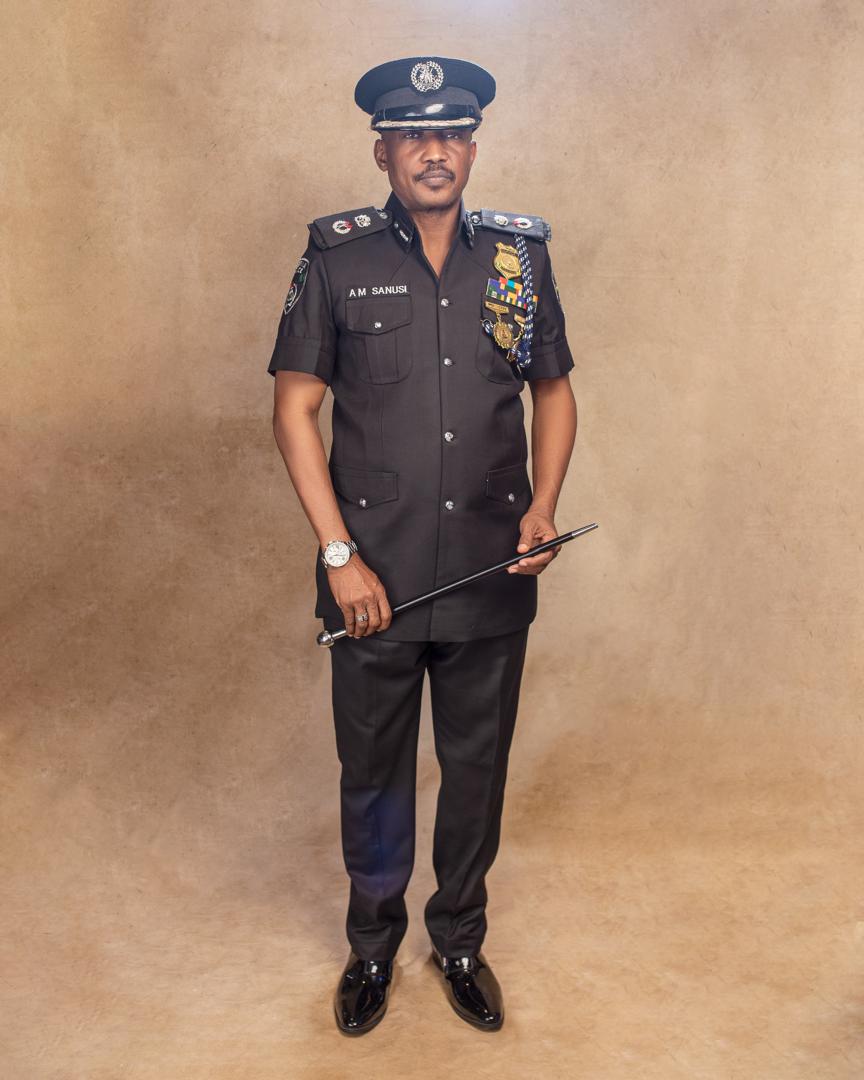
Professor Ahmed Mohammed Sanusi, who is Professor of Criminal Justice at European-American University was recently promoted to the post of Commissioner of Police(CP) in the Nigeria Police Force.
From Berklee to Boutique: How I Built My Academic Pathway Through Performance, Professionalism, and Purpose
By Dr Eugene Seow, DMus, DME, FRSA, FHEA, FVCM(Hons), F.Perf.ASMC, F.Musicol.ASMC, FTCSM
Professor · Postdoctoral Fellow (Contemporary Music) · Lecturer · Examiner · Supervisor
Current Appointments: LASALLE College of the Arts · Singapore Raffles Music College · NUS Centre For the Arts · NTU CAC · Virtual University of Pakistan · European-American University · JHPCU · St. Cecilia School of Music · ASMC · RSA Fellowship
+65 91449826
https://www.researchgate.net/profile/Eugene-Seow-2
scholar.google.com/citations?user=WZa0ePkAAAAJ
zenodo.org/search?q=metadata.creators.person_or_org.name%3A%22Seow%2C%20Eugene%22
When I first began my formal journey in music, I was a driven 21-year-old, fresh out of a dual-major degree from Berklee College of Music, the first institution in the world to offer a degree in jazz. My chosen majors were Professional Music and Jazz Composition, and I selected them for a reason: to ensure both flexibility and rigour, breadth and specificity. I wanted to build a foundation that was institutionally recognised and geographically rooted. Berklee gave me the former; Queens College (CUNY), based in New York City, the global epicentre of jazz, gave me the latter.
At the time, I believed in legitimacy as something conferred from without; a combination of school names, programme titles, and recognisable academic signals. It was not a wrong view, but it was an incomplete one. Over time, I came to see that legitimacy, while helpful, is not an end in itself. It is, at best, an enabler; a passport into spaces where the real work of learning, teaching, creating, and transforming can begin.
That insight, born not from theory but from experience, changed everything.
It led me to pursue self-directed continuing professional development (CPD) long before CPD was a buzzword. I began earning performance diplomas while still in school; my first was an LTCL in Drum Kit with Distinction, awarded in 2011. Over the next decade, I completed over a dozen additional fellowships, performance diplomas, and teaching recognitions across instruments, genres, and domains. These were not ornamental. Each credential was purpose-driven: a statement of mastery in an area that mattered to my professional path, whether it was jazz drums, contemporary piano, electric bass, cajón, or composition.
What became clear to me, and what remains clear now, is that not all learning fits the standard academic mould. In fact, for many musicians, much of our deepest development happens outside it. We grow in studios, on stages, in rehearsal rooms, and through hard-earned feedback from peers, audiences, and collaborators. We iterate constantly. We reflect naturally. Nevertheless, for years, we were told that none of this “counted” unless it came with a transcript.
That is why I began exploring alternative models, not as a rebellion, but as an alignment.
I first encountered institutions like Victoria College of Music (VCM), the Australian Society of Musicology and Composition (ASMC), and Johann Heinrich Pestalozzi Christian University (JHPCU) through online networks, peer conversations, and deep research. Later, I discovered the European-American University (EAU) and its Validation des Acquis de l’Expérience (VAE) model, a system that felt built for practitioners like me. It did not bypass standards; it restructured them. Instead of exams for their own sake, it asked: What have you done? What do you continue to do? Can you demonstrate your contribution, clearly, publicly, and with pedagogical coherence?
I took that challenge seriously. My Doctor of Music submission to EAU was not a symbolic document. It was a comprehensive dossier of my work in performance, curriculum design, rhythm pedagogy, and ensemble fluency. It included scores, recordings, reflective commentary, programme notes, teaching syllabi, and theoretical framing. I treated the process like any doctoral-level qualification. I set my internal bar to match or exceed the quality assurance standards of accredited universities I had worked with.
That is an important point. I did not replace traditional routes; I added to them. I hold a fully accredited Doctor of Music Education (DME) from Liberty University, conferred with High Distinction. I also hold Fellowships in Music Performance, Musicology, Composition, and Teaching from multiple examining bodies. I became a Fellow of the Royal Society of Arts (FRSA)and a Fellow of the Higher Education Academy (FHEA). These are not decorations. They are recognitions of professional output, built over time, across sectors, and roles.
Today, I teach and supervise at every level; from diploma students at LASALLE College of the Arts, to master’s projects at Singapore Raffles Music College (SRMC), to ensemble coaching at NUS and NTU. I serve as a postdoctoral fellow at JHPCU, an external examiner at the Virtual University of Pakistan (VUP), and continue to contribute across platforms like the RSA, Zenodo, and various practitioner publications. I supervise master’s research, advise on curriculum design, and examine doctoral-level submissions internationally. Every role I hold is grounded in the output I have produced and the communities I have served, not just the letters behind my name.
Nevertheless, I know how easily the boutique model gets misunderstood. To outsiders, terms like “unaccredited” or “portfolio-based” can sound like red flags. However, I would suggest that in 2025, the real question is not whether something is accredited; it is whether it is honest, effective, and transformative. I have never once regretted earning my EAU doctorate. It enabled new forms of contribution. It formalised a body of work that was previously invisible to academic gatekeepers. And it connected me with a network of serious, thoughtful educators committed to rigour without bureaucracy.
To those who still question whether these models are “real,” I would ask: What do you consider real? Bureaucracy? Branding? Or the actual work, the impact, the teaching, the mentorship, the public-facing artefacts?
If you measure by outputs, then the boutique route, when appropriately done, not only holds up but outpaces many traditional routes. It demands more initiative, more clarity, and more accountability. There is no syllabus to hide behind. You build your portfolio brick by brick. You stand by your work.
This is why I continue to recommend these models selectively. Not for everyone. But for the right kind of learner: self-directed, agile, intellectually rigorous, and deeply purposeful. For someone with a clear vision and a track record of practice, the VAE route can offer not just a credential but a platform. Moreover, as someone who now supervises, examines, and teaches across both traditional and alternative institutions, I am in a position to walk with students on either path and help them build the portfolio that’s right for them.
For me, the boutique model is not a shortcut. It is a service. It is symbolic, showing that education can evolve to fit real lives. However, it is also strategic: a way to open doors for those whose paths do not fit the old templates. I hold multiple accredited degrees and teach in mainstream institutions. I am not trying to burn bridges. I am trying to build more of them.
That is why I have aligned myself with institutions like EAU; not because they are outside the system, but because they represent an expansion of it. They honour the lived work of professionals. They challenge the outdated idea that only classroom hours and GPA can define expertise. They enable a fuller picture of human learning, one that includes performance, composition, reflection, mentorship, and service.
In the end, what matters is not what your certificate says, but what your work shows.
That is the legacy I want to leave: not just as an educator, but as someone who believes education is what you do with your gifts, not what someone else signs off on.
Furthermore, for anyone still wondering whether boutique credentials “count,” I would simply offer this:
I count. My students count. My work counts.
Furthermore, if it all adds up to impact, then yes, it counts.
Dr. Eugene Seow is a Singapore-based music educator, composer-performer, and academic. He holds a Doctor of Music in Contemporary Performance from European-American University, a Doctor of Music Education with High Distinction from Liberty University, and is currently completing a PhD in Curriculum Innovation and Pedagogic Design at Victoria College, London.
He serves as Professor and Postdoctoral Fellow in Contemporary Music at EAU and JHPCU, and teaches at LASALLE College of the Arts, Singapore Raffles Music College, NUS Centre for the Arts, and NTU CAC. Dr. Seow is a Fellow of the Royal Society of Arts (FRSA), Higher Education Academy (FHEA), and several international music organizations including the Three Counties School of Music (FTCSM), the Australian Society of Musicology and Composition (F.Musicol.ASMC, F.Perf.ASMC), and Victoria College of Music (FVCM(Hons)).
He is also an examiner, curriculum advisor, and postgraduate supervisor with a focus on rhythm pedagogy, ensemble fluency, and alternative models of tertiary music education. His current activities include supervising MMus theses, examining doctoral candidates, editorial work, and contributing to public scholarship through platforms such as RSA Circle, Music in Africa, and Zenodo.
He advocates for practitioner-led pathways, portfolio careers, and assessment models that recognize real-world expertise.
More at: www.eugeneseowmusic.com
European-American University issues all degree certificates (diplomas) and UNESCO supplements centrally. They are then sent by courier to graduates and to affiliated campuses. The University’s documents bear its proprietary seals and the signatures of its Chancellor and Registrar.
The University does not permit any affiliate to produce or issue documents on its behalf. The design of the documents includes security features. The University issues all documents in hard copy and degree certificates on parchment. The University does not issue digital documents of any kind.
The authenticity of any document claiming to be issued by the University can be verified directly with the University by email. In addition, all graduates of the University are listed on its Register of Graduates.
You must be logged in to post a comment.